The secrets behind the language of music
What Whispers Shape Music’s Timeless Craft?
Why do some instruments sing through bone, while others hum with wood or boa leather? How do materials, shapes, and temperatures weave their magic into sound, birthing new creations? DGEM’s quest to archive the world’s musical language unveils these mysteries. We’ve joined virtuosos wielding diverse materials, their notes sparking curiosity. Dive deeper into this sonic odyssey at DGEM.org—where music’s secrets await.
Two different worlds
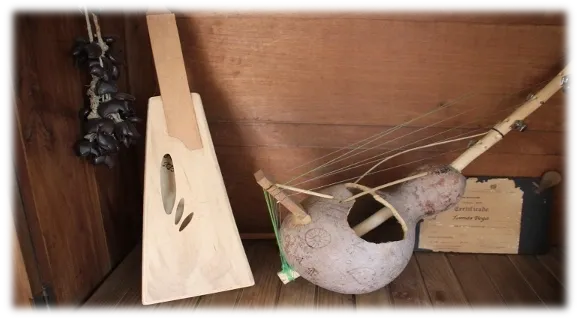
Dominican musician Felle Vega talks about the challenges of mixing Dominican folklore with traditional Chinese music. "It's two different wolds, in terms of music," he said. "We bring the African, native part and when you combine it with the Erhu, there is richness."
Exploring the possibilities of sound
No Images Found!
Boa Leather
Boa Leather
“At DGEM Diapason Global Education for Music, our mission is to connect music lovers with a wide variety of genres and artists. We believe that music is a universal form of expression that transcends borders and cultures.”
The science of sound
“We curate in-depth album critiques, compelling articles on music history, and exclusive artist interviews. Our purpose is to deliver substantive content that profoundly enriches your global musical experience.”
"Join Our Community"
“At DGEM Diapason Global Education for Music, we value the participation of our visitors. Join our community and share your opinions about your favorite songs and artists. Together, we can create a vibrant space for music lovers.”
More DGEM Videos
Hong Wang playing the Erhu
Hong Wang during the workshop at DGEM's concert workshop in DR May 2025
Hong Wang, master Asian musician and inventor, unveils China’s enchanting musical legacy, weaving ancient melodies into DGEM’s global concerts—discover the artistry at DGEM.org.
Hong Wang & Felle Vega just having a great time
In a vibrant restaurant exchange, Felle Vega and Hong Wang’s electric chemistry illuminated the transformative power of DGEM’s concerts, uniting nations through music’s universal language, free from politics. Narrated by Damaris Morales, with Lisa Brainard and Yngrid of DGEM, their passion fuels a global movement, explored at DGEM.org.
A 7,000-9,000 year-old bone flute
The Jiahu relics
Several archeological excavations at the Jiahu site, in Henan Province, China, unveiled a wealth of relics dating back as far back as the 7th millennium BC. Among more than 6,000 artifacts, crafted from materials such as pottery, bone, horn, and shell, several flutes stood out.
The earliest seven-note musical instrument
The meticulously crafted bone flutes mark the earliest known seven-note musical instruments in the world, reshaping the narrative of Chinese and global music history. According to experts, the presence of multiple flutes also suggests the possibility of ensemble performances.
Researchers determined that these instruments are in what we think of as the key of G (one sharp). And the fact that they have seven holes could mean that they were used for melodies, rather than whistle sounds, according to experts.
There are older instruments (roughly 43,000 years-old) that have been found in Europe. But they are in fragments and their identities as flutes has been highly debated.
Listen to this ancient flute live, very limited seating that you do not want to miss.
You can listen to these ancient flutes at our inaugural concert, which will take place in Las Vegas, Nevada on April 27, 3pm at Dr. Arturo Rando-Grillot Hall, UNLV.
The Nanjing Music Ensemble
The Nanjing Ensemble Quartet Produced by Hong Wang 汪 洪 -DGEM.org
The Nanjing Ethnic Quartet from China will be playing for DGEM in Las Vegas in April 27th, 3:00pm-4:00pm 2025. These musicians will be bringing an authentic nine-thousand year old “Cranes Bone Flute”, property of the Chinese government. The Nanjing Ethnic Quartet—an exceptional group of performers from China—will perform with musical virtuoso Dong bo Yu, as he showcases the Jia Hu bone flute. Mr. Yu is the inheritor of this priceless artifact entrusted by the Chinese government. The quartet includes master musicians playing the Erhu, Pipa, and other traditional Chinese instruments, offering music lovers in America an unparalleled cultural and musical experience.